

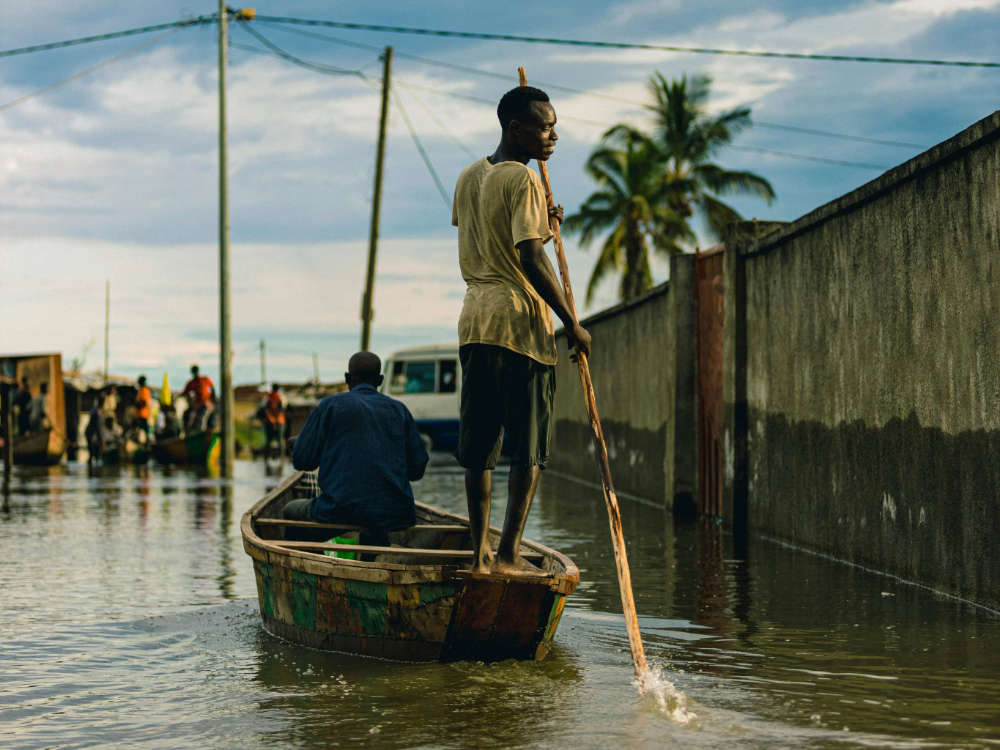
A fellow of the Nigerian Institute of Architects in Rivers State, Ebi Bozimo, has called on the Rivers State Government to urgently activate comprehensive emergency management procedures to mitigate the impact of the anticipated flooding across vulnerable communities in the state.
Mr. Bozimo made this appeal during an interview with correspondent Tumini Braide, where he expressed concern over recurring flood incidents and the level of preparedness ahead of the predicted heavy rains. He emphasised that a proactive and coordinated response by relevant authorities would significantly reduce the loss of lives, property, and livelihoods often associated with flooding in the state.
He specifically urged the Rivers State Emergency Management Agency (SEMA) and the National Emergency Management Agency (NEMA) to immediately begin the provision of relief materials such as food supplies, temporary shelter items, medical kits, and clean water in strategic locations. According to him, early deployment of these resources would ensure a faster response time and provide critical support to residents who may be displaced by floodwaters.
“The first thing is, let's never forget that our part of the world has two primary seasons - dry and rainy seasons. So the occurrence of rains is not a surprise. Now, we're getting a lot of early notice that floods are coming. We will not say when it comes that we didn't know.
The thing to do first right now is start emergency management procedures. If they already exist, activate them. If they exist, communicate them. Let people know what to do if and when those floods truly come,” he said.

Bozimo further highlighted the need for the government to go beyond short-term emergency responses by investing in sustainable urban planning strategies. He advised that comprehensive environmental and structural surveys be conducted to accurately determine floodplain levels and water flow patterns across different parts of the state.
He noted that such data-driven assessments would help authorities make informed decisions regarding infrastructure development, road construction, drainage systems, and housing projects, thereby reducing the vulnerability of communities to flooding.
“We are supposed to have surveyed our entire state to understand what areas lie below average floodplains. You have something called the 50 year flood, you have something called the a hundred year floods. These are considered to be catastrophic floods.
You should establish what that datum, that line above the ground is and where possible you designate those places as high risk areas. If you are going to buy there, you should be guided that your building foundation should be above a certain level, ” he added.
In addition, he advocated for the identification, proper mapping, and public awareness of flood-prone areas, stressing that residents must be well-informed about the risks within their environment. He explained that clearly mapped flood zones would enable the government to designate safe areas for relocation and establish well-structured evacuation routes to be used during emergencies.
The architect also called for stronger collaboration between government agencies, urban planners, and environmental experts to develop a long-term flood management framework. He warned that without deliberate planning and strict enforcement of building regulations, the state may continue to experience the devastating cycle of annual flooding.
“The state government has a care of duty to designate known flood planes, potential flood planes, and also to map out ways of evacuation whenever disasters occur or in advance of disasters. Of course, the state government and other arms of government must monitor the weather conditions very carefully so that they can give early warning.
You can collaborate with the telecommunications companies to send out messages to every phone in a certain district so that whether you are on any of the networks, as an imminent disaster is coming, everybody with a phone will get an SMS and they will now be more prepared,” he advised.
Bozimo concluded by urging residents to remain alert, adhere to safety advisories issued by authorities, and avoid building or residing in high-risk flood zones, noting that collective responsibility is essential in reducing the overall impact of natural disasters in Rivers State.
 International Mother Earth Day: Expert Warns of Rising Health Risks Amid Niger Delta Pollution
Comments
Add a comment