

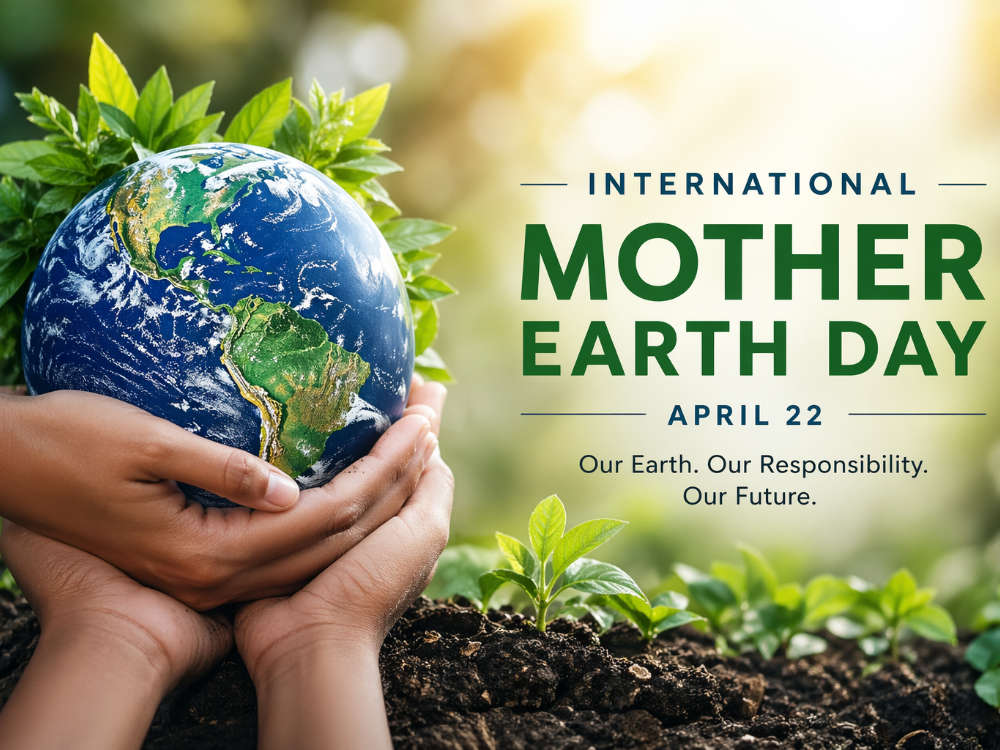
As the world marks International Mother Earth Day, a biochemist and environmental toxicologist is raising concerns about the growing impact of pollution on human health and ecosystems, particularly in oil-producing regions like the Niger Delta.
Dr. Adata Jumbo, who is a lecturer at the Federal Polytechnic of Oil and Gas in Bonny Local Government Area of Rivers State, says the observance is a critical reminder of the deep connection between human activity and the health of the planet.
“Mother Earth is the origin of everything, every living thing, plants, animals, higher plants, higher animals, and lower animals. So when God created, He created the heavens and the earth. So, Mother Earth is the genesis of all creation, and it's very important because all living things survive on earth. So, what we do or fail to do affects everything else,” she said.
Pollution and Health Risks in Focus
In an interview with correspondent Lerabari Deeyor, Dr. Jumbo pointed to mounting evidence linking environmental pollution to serious health risks. She revealed that her recent research on gas flaring in the Niger Delta found high levels of toxic substances in the environment, including polycyclic aromatic hydrocarbons, carbon monoxide, methane, and other harmful gases released during combustion of fossil fuels.

According to her, prolonged exposure to these pollutants can overwhelm the body’s natural defence systems, potentially leading to a range of illnesses.
“All living things have mechanisms that help to get rid of harmful toxins. When we take them in, our body has a lot of mechanisms that help us to get rid of them, but when we are exposed to them for a prolonged period of time and in high concentrations, we over-labour these mechanisms in our body and then if this is not checked, it could lead to ill health.
That means the body may be overwhelmed, these mechanisms may become overwhelmed at some point and may not be as effective, and it could lead to several diseases,” she explained.
She added that pollution also affects food sources, with toxins entering crops, water bodies, and fish, posing indirect risks to human health through consumption.
Policies Exist, But Enforcement Weak
While acknowledging that environmental regulations are in place, the researcher noted that enforcement remains a major challenge.
“There are a lot of policies and they are effective. However, what is not effective is the execution of these policies. So there are executing bodies and regulatory bodies who are responsible for making sure that these policies are followed. But, because of a lot of glitches here and there, and poor checks and balances, regulations are not strictly followed.
From a lot of literature I came across in the course of my research, there are penalties for not following these regulations. However, these penalties are such that it's easier for these companies to make those penalty payments, rather than actually do what's right,” she added.
She further warned that the continued release of greenhouse gases and other pollutants contribute to broader environmental issues, including climate change, extreme weather conditions, and depletion of the ozone layer.
What Individuals Can Do
Despite the scale of the problem, Dr. Jumbo stressed that individuals also have a role to play in protecting the environment.
She recommended simple but practical steps such as, reducing the use of plastics and non-biodegradable materials, reusing items where possible instead of discarding them, avoiding indiscriminate waste disposal, planting trees and maintaining green spaces, growing food locally to reduce exposure to contaminated produce.
She also urged people to be more mindful of everyday actions, noting that small decisions, like how waste is handled, can have long-term environmental consequences.
A Call for Responsibility
As activities mark this year’s Mother Earth Day, Dr. Jumbo called for greater awareness and personal responsibility in environmental protection.
“As much as we cannot control everybody else, we have control over our own actions and inactions. So, before you discard that waste while driving, before you discard that waste product through your window, before you throw out waste out of your door, think about your children and your children's children. Think about the environment, think about the ecosystem. What we put into the environment somehow comes back,” she concluded.
This year’s International Mother Earth Day highlights the urgent need for collective action, from governments, industries, and individuals alike, to ensure a cleaner, healthier, and more sustainable planet.
 Rivers Flood Alert: Expert Urges Government to Activate Emergency Response Ahead of Heavy Rains
Comments
Add a comment