

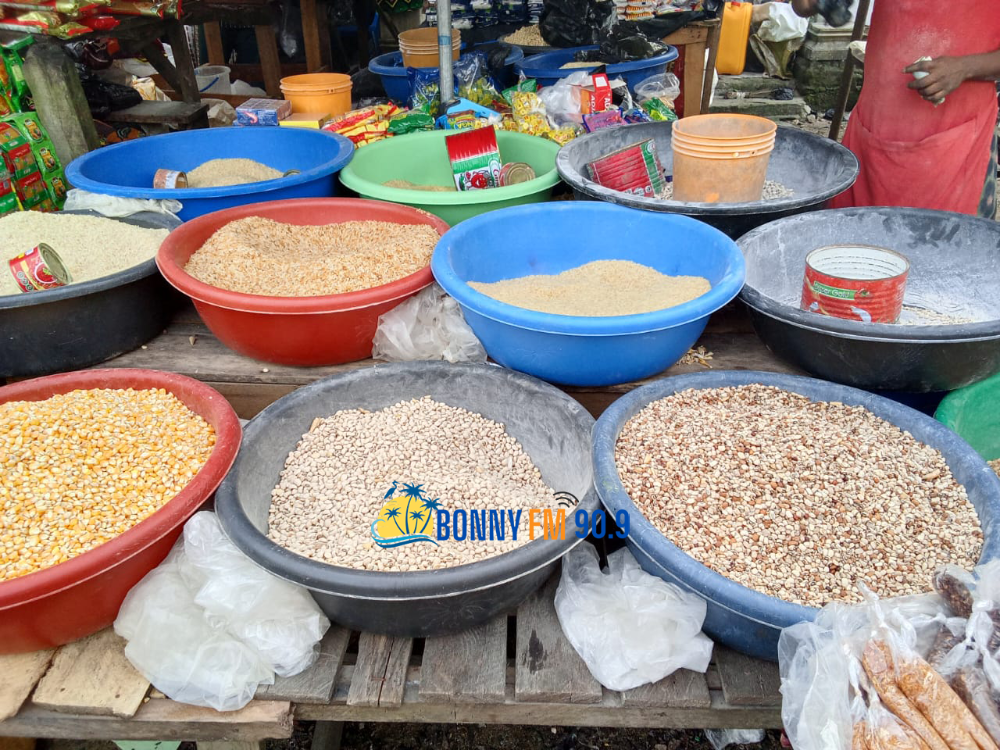
Food and essential commodity prices remain high in parts of Gokana, Khana, and Tai Local Government Areas of Rivers State, despite claims by the Federal Government of improvements in Nigeria’s economy.
A market survey by Bonny FM at Kibangha market in Gokana, Bori market in Khana, and Nonwa market in Tai found that traders are experiencing low sales, which they blamed on households’ reduced purchasing power.
A crayfish seller told Bonny FM correspondent, Damian Gbogbara, that she had reduced her prices to attract customers and meet her children’s school needs, while other traders blamed rising costs on transportation expenses and seasonal shortages.
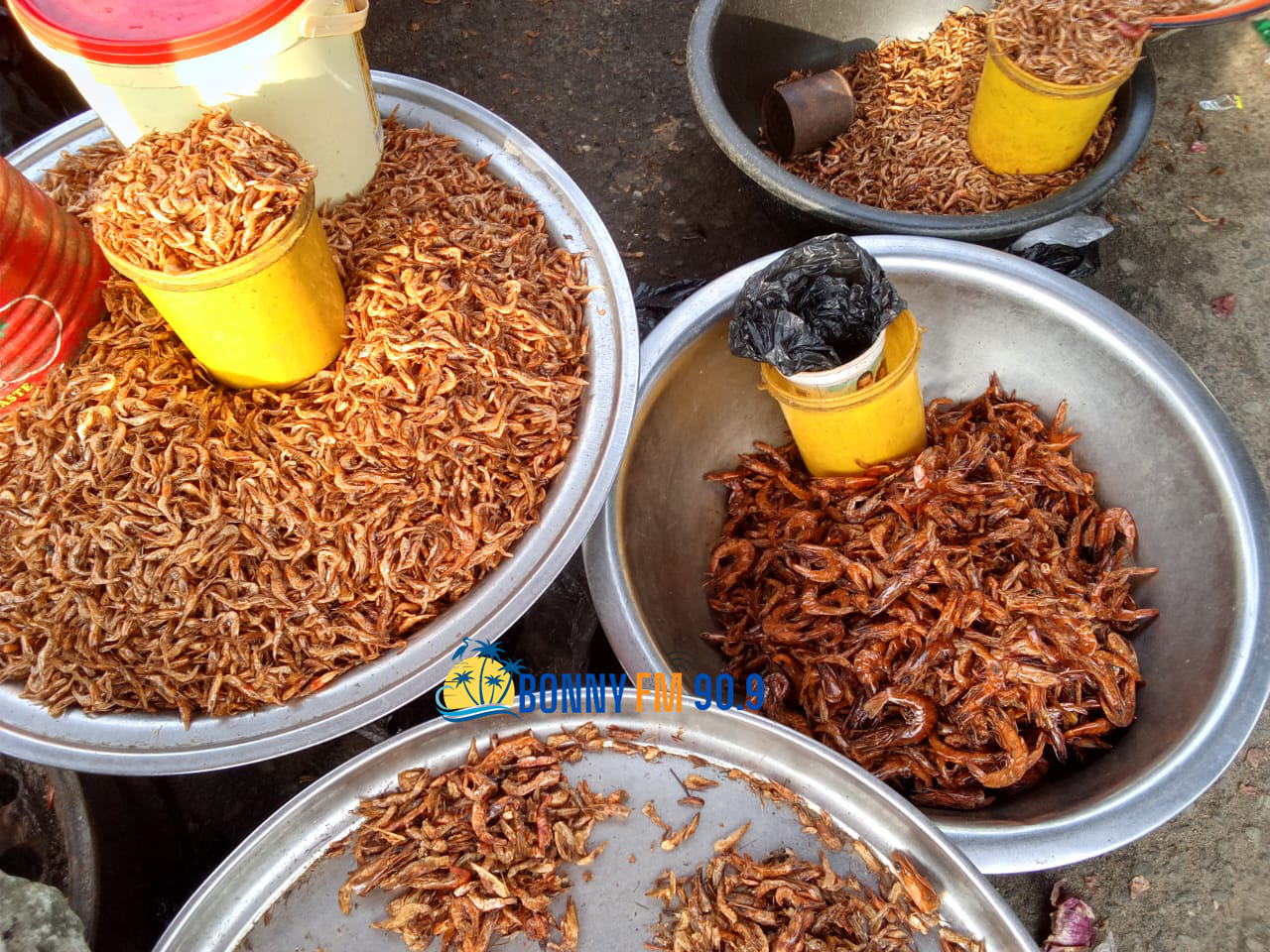
Bowls of crayfish / Photo by Damian Gbogbara
The survey found that a custard rubber of rice sells for between ₦5,300 and ₦7,000, while a custard rubber of garri costs between ₦2,000 and ₦3,500, depending on the variety.
A custard bucket of beans sells for between ₦4,700 and ₦5,700, while a bag of onions costs between ₦40,000 and ₦150,000, depending on size. A custard bucket of crayfish sells for between ₦11,000 and ₦16,000.
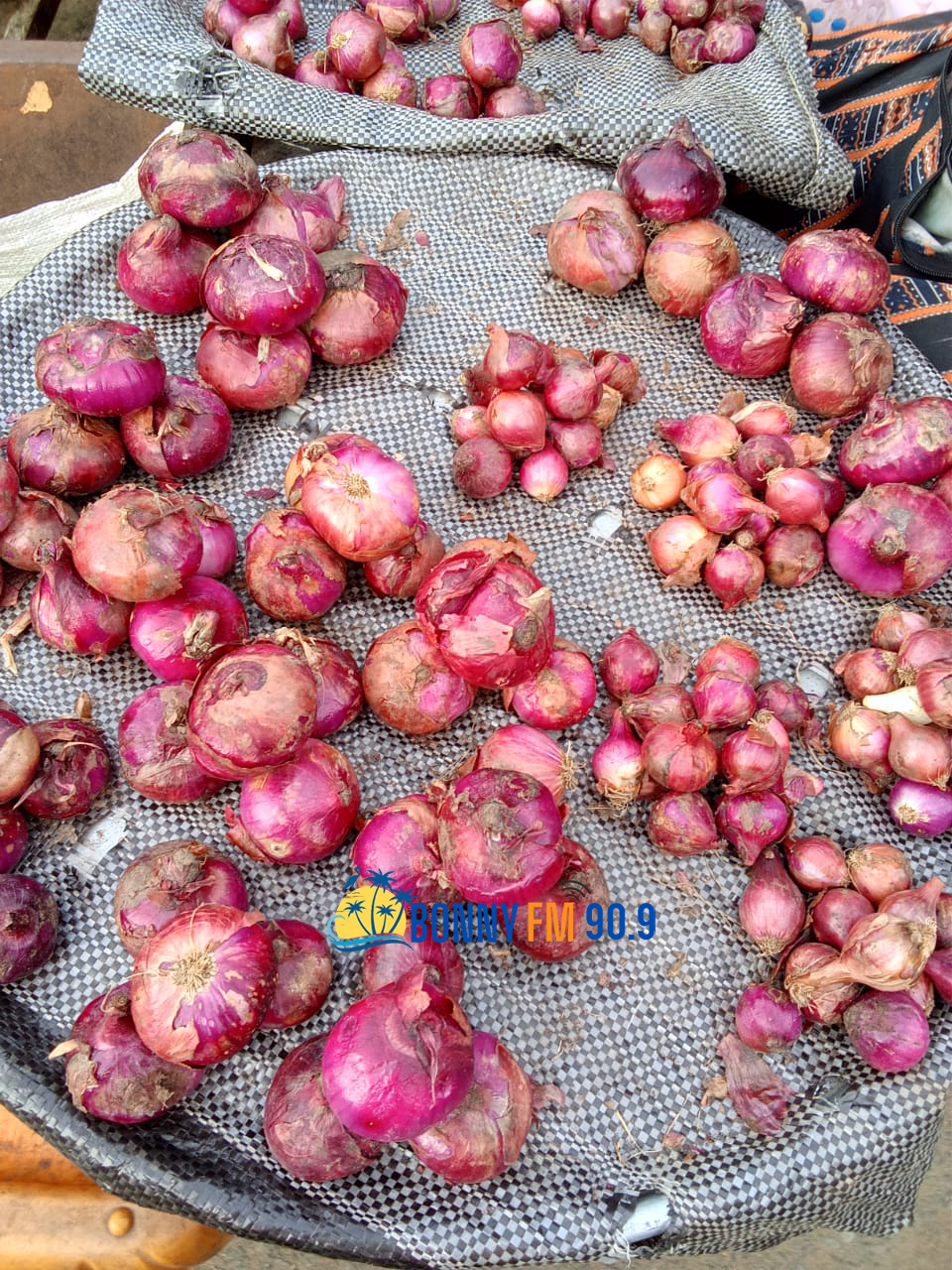
Onions / Photo by Damian Gbogbara
Meanwhile, 75-centilitre bottles of palm oil cost between ₦1,400 and ₦1,500, while the same quantity of groundnut oil sells for between ₦1,900 and ₦2,100.
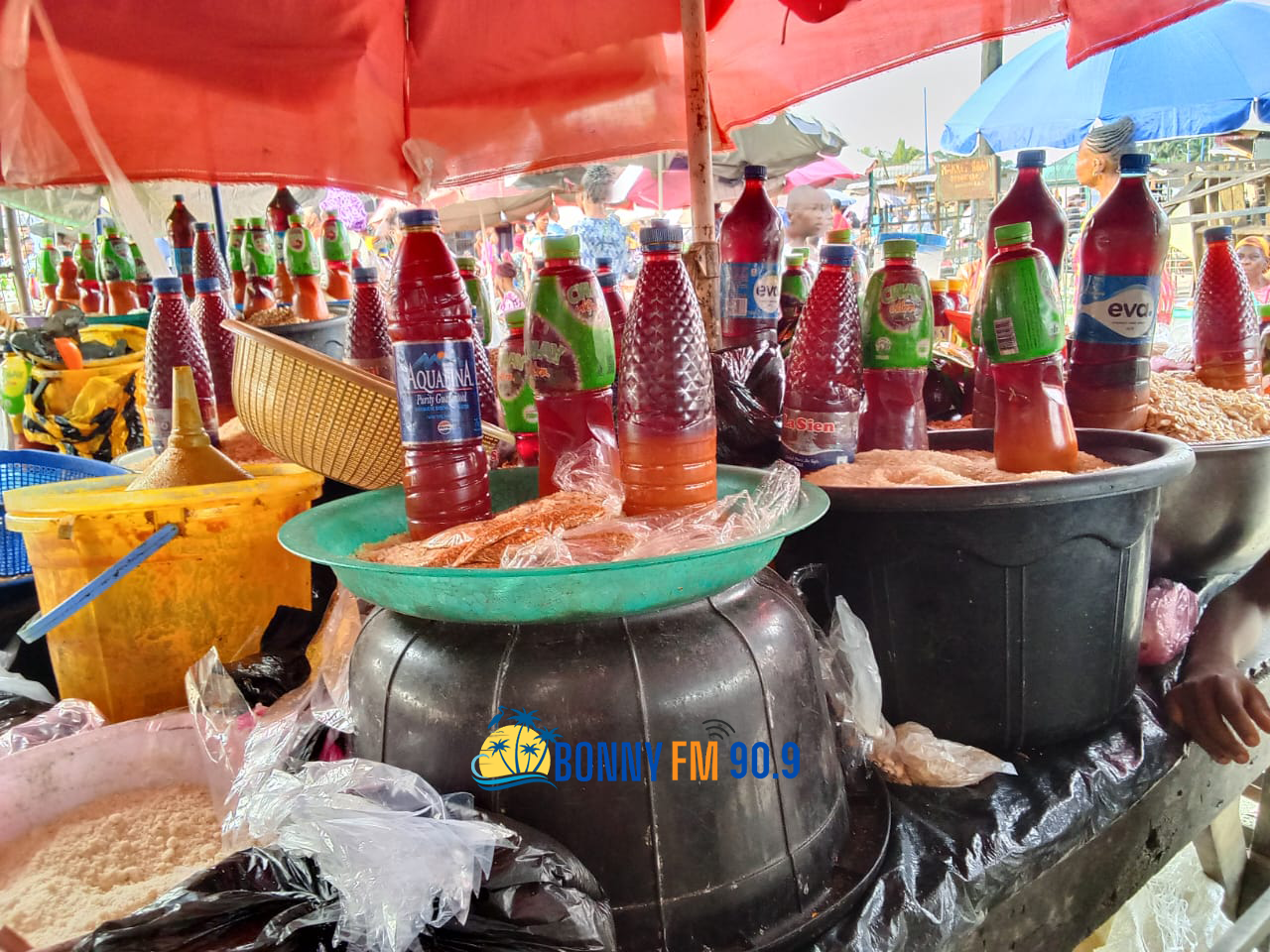
Bottle of palm oil / Photo by Damian Gbogbara
Petrol sells for about ₦1,400 per litre at filling stations and ₦1,600 on the black market, while cooking gas costs about ₦1,500 per kilogramme at filling stations and between ₦1,800 and ₦2,000 through informal sellers.
Elsewhere, in Eleme Local Government Area, residents have appealed to the government to address the rising cost of food, cooking gas, and transportation.
Speaking to Bonny FM correspondent Jiji Williams, a resident, Comfort Joseph, said the price of cooking gas had risen from ₦1,300 to ₦1,500, while a measure of garri had increased from ₦2,500 to ₦3,500.
She added that transport fares had doubled on some routes.
Also speaking, the traditional ruler of Nyime Eta Okori Community in Alesa, High Chief Gomba Jiji, said residents have yet to feel any improvement in the economy despite reports of recovery.
In Port Harcourt, residents and traders have continued to call for more measures to ease the cost of living, saying the prices of several household food items remain high.
They spoke to our correspondent Emeka Williams, who carried out a market survey to check the prices of foodstuffs in Mile One market.
The survey revealed that a litre of groundnut oil currently sells for ₦4,000 and 75 centilitres sells for ₦2,000; a litre of palm oil is sold for ₦3,000, while 75 centilitres is ₦1,500.
Also, a custard bucket of Mango rice is sold for ₦7,000, a custard bucket of Iron beans costs ₦5,500, while a custard bucket of butter beans sells for ₦6,000.

Meanwhile, an entrepreneur and civil society activist, Eugene Abels, says many Nigerians continue to struggle with high living costs despite the World Bank’s reported economic growth figures and slower inflation rate.
Speaking with our correspondent, Abels said high interest rates and the operations of the Dangote Refinery may have supported economic activity, but argued that the benefits have yet to reach ordinary citizens.
 Nigeria at 66: Citizens Reflect on Growth Challenges
 How to Harness Bonny’s Rich Culture for Economic Growth
 World Maritime Day: Stakeholder Calls For Practical Support For Seafarers
 Development expert warns anti-migrant crackdown in South Africa could trigger continental crisis
 'We're Tired of Carrying Africa': South African Entrepreneur Defends Anti-Illegal Immigration Campaign
Comments
Add a comment