

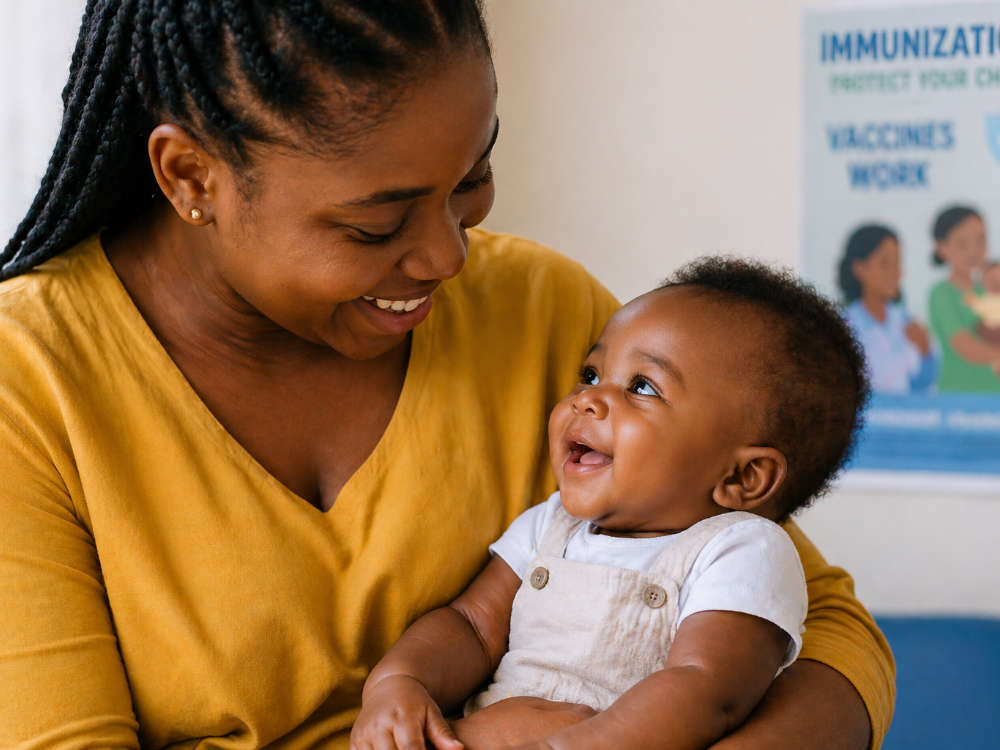
As Nigeria joins the global community to mark the 2026 World Immunisation Week, a paediatrician at the University of Port Harcourt Teaching Hospital (UPTH), Mary Irabor, has reassured mothers and caregivers that vaccines administered to infants are safe, effective, and do not cause harmful side effects.
She gave the assurance during an interview with correspondent Tumini Braide, amid growing concerns among some parents over perceived negative reactions following immunisation.
Addressing these fears, the medical consultant explained that most post-vaccination reactions are mild and temporary, often resolving within a short period without any lasting effects.

Irabor emphasised that vaccines undergo extensive scientific research, clinical trials, and strict regulatory approval processes before they are introduced for public use. According to her, these measures are put in place to ensure that every vaccine administered to children meets global safety standards and effectively protects against serious diseases.
She noted that while mild symptoms such as slight fever, swelling at the injection site, or temporary discomfort may occur after immunisation, such reactions are normal and indicate that the body is building protection against infections. She stressed that these minor effects should not discourage parents from completing their children’s immunisation schedules.
“The vaccines themselves are just little bits of each of these various deadly diseases introduced into the child so that the child can trying and be able defend themselves when these real diseases come,” she said.
The paediatrician further highlighted the critical role vaccines play in preventing life-threatening illnesses. She explained that vaccines administered at birth, including the Bacillus Calmette-Guérin (BCG) vaccine, help protect infants against tuberculosis, a potentially severe infectious disease. Similarly, the oral polio vaccine is given to guard against poliomyelitis, a viral infection that can lead to permanent paralysis.
“The vaccine themselves are just to help the child to form some form of soldiers to fight off these diseases, and they usually give them early, that is why we give them when a child is born so that they would be able to form these soldiers to fight off these vaccine-preventable diseases,” she explained.
Irabor also pointed out that the hepatitis B vaccine is routinely administered to newborns to protect them from liver infections that could result in chronic disease or long-term complications later in life.
She urged mothers and caregivers to strictly adhere to the recommended immunisation schedule, noting that timely vaccination is essential for building strong immunity in children, especially during their early stages of development.
“Getting your child not vaccinated, you are not just making the child at risk of dying from vaccine-presentable diseases, you are also putting other children at risk,” she added.
While reiterating the importance of immunisation, Irabor cautioned parents against relying on unverified information, particularly from social media or informal sources. She encouraged them to seek accurate guidance from qualified healthcare professionals whenever they have concerns or questions about vaccines.
She concluded by stressing that immunisation remains one of the most reliable and cost-effective public health interventions, playing a crucial role in reducing child mortality and ensuring healthier communities.
The World Health Organisation says the World Immunisation Week 2026 is marked in the last week of April, running from April 24 to 30 with the theme ‘For every generation, vaccines work.’ The campaign focuses on how vaccines protect families, communities and future generations. It also aims to increase immunisation coverage, close immunity gaps and build confidence in vaccine safety.
 Optometrist warns against dangerous eye health myths like use of urine and breast milk
 Expectant Mothers Urge Government to Provide Better Healthcare Facilities in Bonny
 Successful Delivery of Quadruplets Sparks Joy in Bonny Island
Comments
Add a comment