

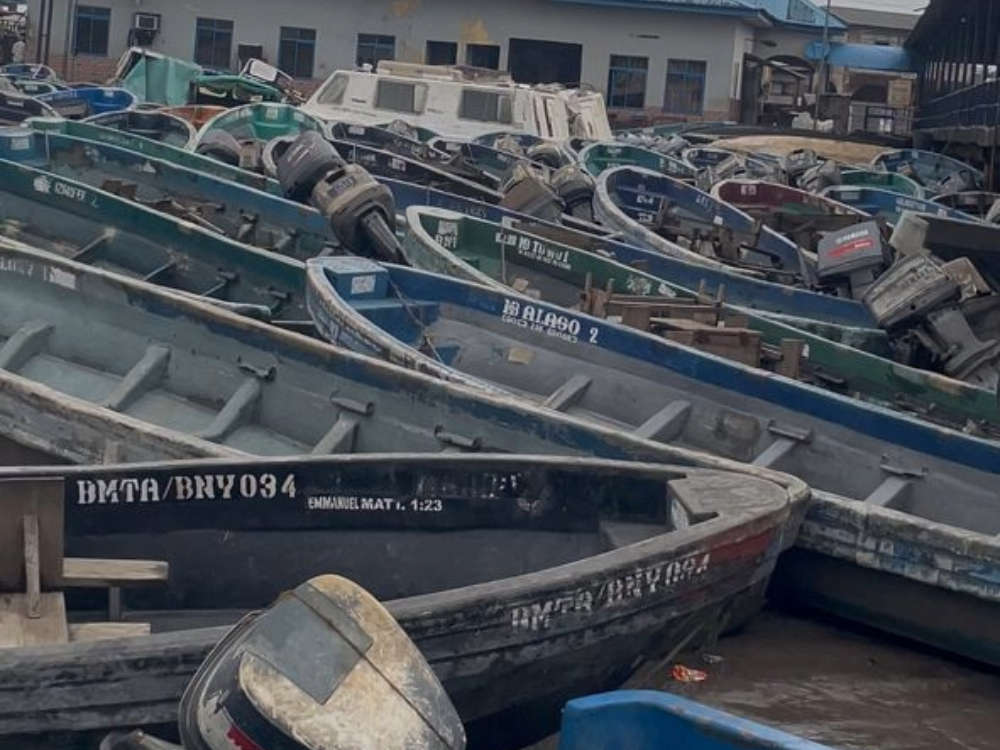
When the Bodo-Bonny Road in Rivers State was temporarily opened in December 2025, it was greeted with relief, celebration, and hope. For the first time in decades, Bonny Kingdom could breathe a little easier, connected by land, not just water. If all things go as planned, the Federal Government is set to permanently open the road in March 2026.
However, beneath the applause and optimism lies a quieter story, one of displacement, stalled engines, and livelihoods hanging in the balance.
In this edition of Eyewitness Report, Bonny FM’s Deinma Abaku measured the impact of the Bodo-Bonny Road by speaking to some of the people most affected by its arrival: commercial boat operators.
For the Chairman of boat owners in Bonny Local Government Area of Rivers State, Asi Dappa, the road itself is not the enemy.
“The road is a good development. It is a good development for the kingdom,” he says.
Yet, the very progress the road represents has drastically altered the survival of those who once kept Bonny moving by water.
“We don’t have passengers again,” Dappa explains. “Since all this while, this business is the business assisting the Bonny Kingdom. It’s the business assisting the companies.”
Promises Made, Assistance Awaited
The boat operators say they have reached out for help to the local government council and companies on the island. According to the union, the Local Government Chairman promised a ₦5 million support package for the union—support they say has yet to materialise.
“We are still appealing to the local government to come to our aid and assist us,” Dappa says.
Beyond the government, there is also hope that multinational companies operating in the area will step in to cushion the blow.
Falling Prices, Rising Costs
In an effort to survive, Dappa confirms that boat operators have slashed fares, as a distance that once cost ₦9,000 now goes for ₦7,500. But even that has not been enough, as boat operators say reducing the fares would make it difficult to maintain their boats.
“Maintaining the engine is not easy, and maintaining the boat too is not easy,” a boat operator says.
He also explains that boats consume more fuel than cars, and therefore, cannot charge the same amount for fares to Port Harcourt.
“You cannot collect the same amount… It’s not possible,” he added.
The result? Boats remain docked as some breadwinners remain indoors. Standing beside idle boats, engines silent, another boat operator paints a stark picture.
“I am a boat owner. I am a driver. Since the road started, I have not moved. Look at my boats—one is there, the other two are there. There are no passengers.”
Progress With Consequences
As the Bodo-Bonny Road edges closer to permanent opening in March, the question grows louder: What happens to those whose livelihoods depend on water transportation?
The impact of the temporary opening has already been massive. A permanent opening could be transformational—but also devastating—if no safety nets are put in place.
On this episode of Eyewitness Report, boat operators have made one thing clear: while roads may open pathways to progress, true development must carry everyone along.
Watch video below:
 Successful Delivery of Quadruplets Sparks Joy in Bonny Island
 Education in Mother Tongue Improves Learning Outcomes - Kari
 NOA Calls for Urgent Security Action to forestall Ethnic tensions in Rivers State
 Parents Question Variation in WAEC and NECO Registration Fees in Rivers State
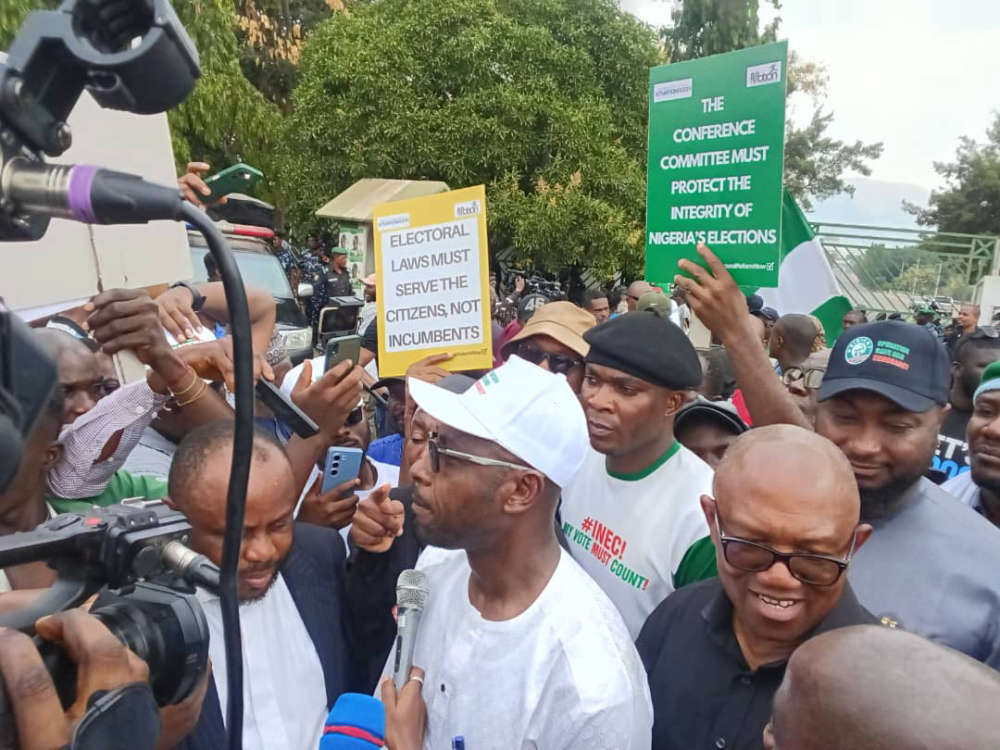 Obi joins protest at N’Assembly, says Nigerians don’t want glitch again
Comments
Add a comment