

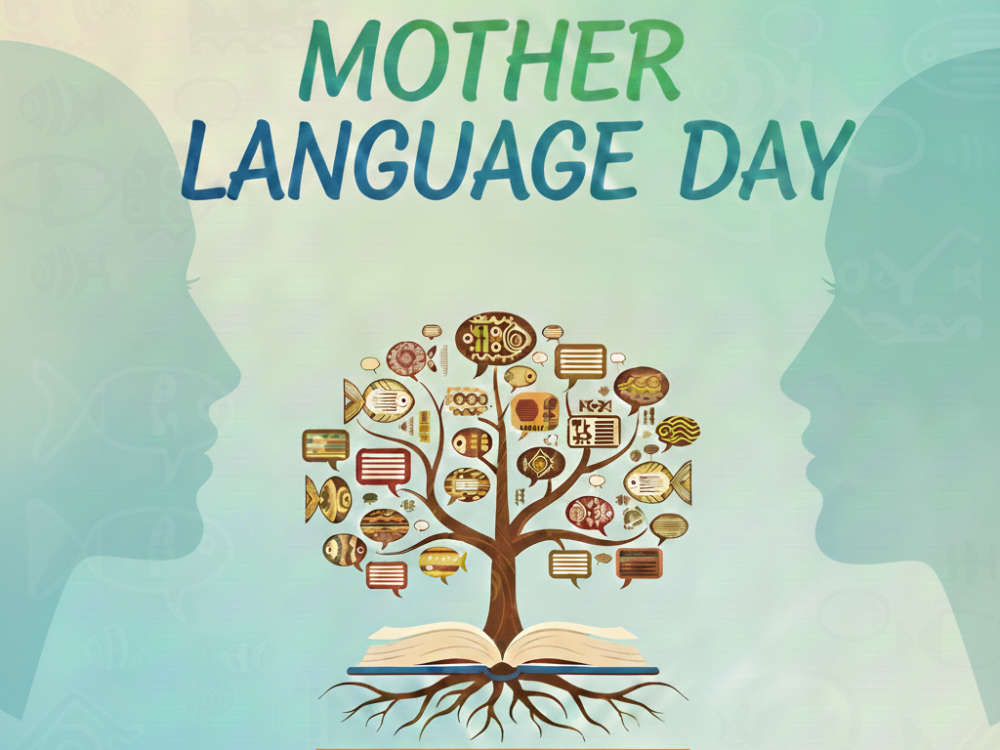
Today is International Mother Language Day, a day set aside to promote linguistic diversity, multilingualism and cultural heritage across the world.
It shines a spotlight on the power of language to shape culture and preserve heritage. The day also draws attention to the close link between language and identity, and stresses the need for education systems to teach children in languages they understand best.
At the heart of this global observance is a growing call for education systems to teach children in their mother tongue, especially in multilingual societies where millions are left behind by language barriers. Beyond culture and heritage, the day underscores a simple truth: people learn, participate, and thrive best in the language they understand.
Nigeria’s National Language Policy
Mother tongue or mother language is the first or native language a person learns from birth. In Nigeria, it varies, given that the country is blessed with over 500 indigenous languages.
Authorities fear that the country's linguistic diversity makes implementing the use of indigenous languages as a medium of instruction in schools nearly impossible.
As a matter of fact, the Federal Government recently reversed the 2022 National Language Policy, a mother-tongue-based instruction policy which made mother tongues a compulsory medium of instruction from primary one to six.
Minister of State for Education, Professor Suwaiba Ahmad, during a television interview cited Nigeria’s highly heterogeneous classrooms, especially in urban cities, as a major barrier to effective implementation of the policy.
She said although research proves that children learn better in their mother tongue, the policy has failed in practice in Nigeria because most classrooms contain learners and teachers who speak different languages.
She further explained that unlike the ideal settings used in earlier educational experiments, where all learners, teachers, and materials shared one language, Nigeria’s linguistic diversity makes inclusive implementation impossible.
Linguistic Expert Faults Scrapping of National Language Policy
Meanwhile, a Professor of Linguistics at the University of Port Harcourt, Ethelbert Kari, faulted this decision of the Federal Government to scrap the use of indigenous languages as a mode of teaching and learning in primary schools.
Professor Kari, in an interview with correspondent Lerabari Deeyor, accused the government of failing to adequately fund indigenous language education.
He urged the federal government to reconsider its stance and fully implement the National Language Policy, arguing that it offers greater long-term benefits for Nigerian students.
Speaking on the significance of the mother tongue and indigenous languages, Professor Kari described language as what defines a people.
“Take away language from the people, and you have taken away everything about them,” he said.
He also noted that the political and social relevance of language is impossible to ignore. Even during elections, he observed, candidates who cannot speak their local language often memorize phrases just to reach voters.
“When it is time for elections, even those who do not speak the language struggle, they want to memorize a few words or phrases to break through, to get through to the people,” he said.
According to him, giving priority to indigenous languages would strengthen national unity, as citizens would feel seen, included, and valued, especially those who do not speak English language fluently.
Learning Happens Faster in Familiar Words
Beyond identity and politics, Professor Kari stressed that mother-tongue education significantly improves learning outcomes.
He argued that students taught in their native languages can perform just as well as native English speakers if given the same opportunity.
“If you teach me in a language I understand better, I will think faster,” he explained.
His remarks echo long-standing research showing that children grasp concepts more quickly, participate more actively, and retain knowledge longer when taught in familiar languages.
However, according to the United Nations, about 40 per cent of learners worldwide still lack access to education in their mother tongue, especially indigenous, migrant and minority youths, which calls for an urgent need for policies that place multilingual education at the centre to ensure inclusion and equal learning opportunities for all.
Youth at the Centre of the Conversation
As the world becomes increasingly interconnected, experts warn that linguistic diversity is under threat, with many indigenous languages facing extinction.
That is part of the reason why the theme for the 2026 International Mother Language Day is, ‘Youth Voices on Multilingual Education’, which places young people at the forefront of the global language conversation, recognising their role in shaping inclusive policies and preserving endangered languages.
International Mother Language Day, commemorated on February 21 annually, serves as both a celebration and a reminder that when languages disappear, stories fade, cultures weaken, and voices fall silent.
And as Professor Kari puts it, protecting language is ultimately about protecting people, ensuring that no one is locked out of learning, governance, or national life simply because they speak differently.
Lerabari Deeyor is a journalist based in Rivers State. She is currently a News Editor and Newscaster at Bonny FM, and has been in the media industry for over a decade. She writes on various topical issues with particular interest in the environment, education, health, technology and innovation.
 Parents Question Variation in WAEC and NECO Registration Fees in Rivers State
Comments
Add a comment